
When caring for someone you love starts wearing you down
Caregiver burnout is real — and recognizing it isn't a sign of failure. It's the moment that opens the door to getting the help that lets you keep going.
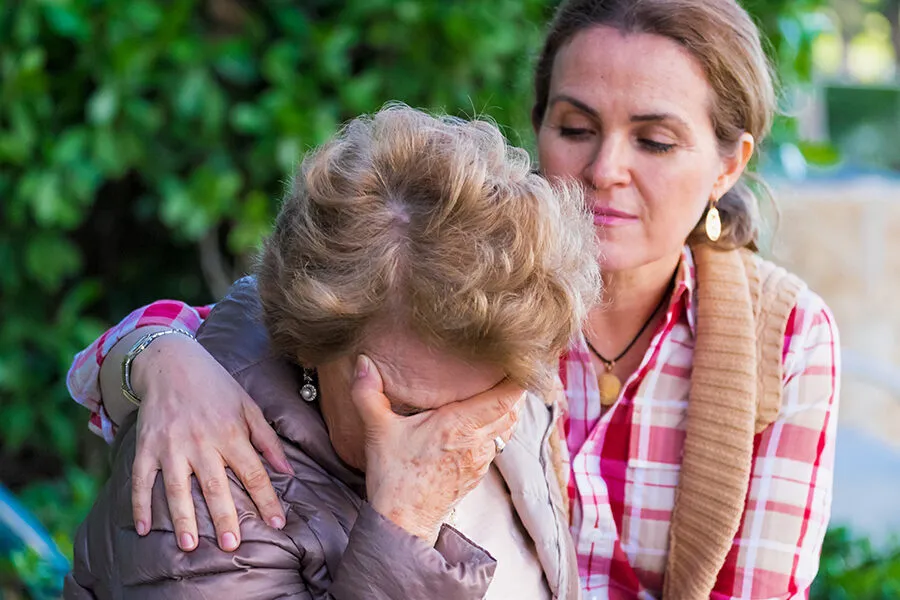
There's a particular kind of exhaustion that comes from caring for someone you love. It doesn't announce itself. It builds slowly, over weeks and months of early mornings, rearranged schedules, and small worries that never quite leave you. If you've been the primary person managing your parent's care, you may have already felt it without having a name for it.
That name is caregiver burnout. And the most important thing to know about it is this: feeling burned out doesn't mean you've failed. It means you've been carrying a lot, often without enough help, for longer than you should have had to.
What caregiver burnout actually is
Burnout isn't the same as having a hard week. It's a state of ongoing physical, emotional, and mental depletion that comes from sustained caregiving without adequate rest or support. The Family Caregiver Alliance (caregiver.org) describes caregiver burnout as a progressive exhaustion that develops when caregivers don't get the help they need, or when they push themselves to give more than they have.
What makes burnout especially difficult is that it can sneak up on people who are deeply committed to the person they're caring for. The very qualities that make someone a devoted caregiver, such as loyalty, a sense of responsibility, and love, can make it harder to step back and notice that you're running on empty.
Signs you may be approaching burnout
Burnout rarely arrives all at once. It tends to show up in smaller ways first, across several areas of your life.
Emotional signs
You may feel more irritable than usual, including with your parent, and feel guilty about it afterward. A sense of hopelessness or helplessness, as though nothing you do is ever quite enough, is common. Some caregivers describe losing the sense of meaning or satisfaction that the role once brought them. Others find themselves withdrawing from friends, activities, or relationships that used to feel important.
Physical signs
Chronic-stress research consistently links caregiver burnout to more frequent illness. Beyond that, disrupted sleep, persistent fatigue, tension headaches, and a general sense of physical heaviness are all signs the body is telling you something. If you find yourself getting sick more often, or taking longer to recover than you used to, it's worth paying attention.
Why family caregivers often don't ask for help
Most caregivers know, on some level, when they're struggling. The harder question is why so many wait so long to reach out. Three patterns come up again and again.
"I should be able to handle this." Caring for a parent can feel like a duty that isn't supposed to have limits. Asking for help can feel like admitting you're not strong enough, even though the opposite is true. It takes real clarity to recognize when the load has grown too heavy for one person.
"No one else can do this the way I do." This is often true in small ways, and never true in the larger sense. A professional caregiver can't replace you, but they can take on the practical tasks that are draining your energy, so that what's left of your time together is more like what it used to be.
"My parent would feel like a burden." Many adult children quietly absorb more than they can carry because they don't want their parent to feel responsible for their stress. But the National Alliance for Caregiving (caregiving.org) has found that caregiver burnout affects the quality of care over time. Taking care of yourself is, in a real sense, taking care of your parent, too.
What asking for help actually looks like
Asking for help doesn't mean stepping away. It means adding support so you can stay in the role sustainably.
For many families in North Seattle, Shoreline, Everett, and Lynnwood, the first practical step is respite care: professional home care for a few hours a day, or for a longer stretch when a caregiver needs genuine time to rest and recover. Respite isn't a concession; it's a strategy. It gives you room to sleep, see a friend, manage your own health, or simply have a morning that doesn't begin with someone else's needs.
If you're not sure what's available or how to start, our team serving North Seattle, Shoreline, and Everett offers free consultations. There's no obligation, just a conversation about what support could look like for your family.
When it is time to make the call
There's no single threshold that tells you it's time, but a few questions can help you think it through. Are you consistently sleeping poorly? Have you stopped doing things that used to matter to you? Are you feeling resentful, even toward the person you're caring for? Have people close to you mentioned that you seem tired or different?
If your honest answer to any of these is yes, that's a meaningful signal, not a reason to feel bad about yourself, but a reason to reach out.
Burnout that goes unaddressed tends to deepen, not improve on its own. The caregivers who sustain the role over the long term are almost never the ones who pushed hardest alone. They're the ones who recognized the limits of going it alone and built in support before those limits broke them.
If you're at that point, or approaching it, our care-and-companionship services are built for exactly this: a steady, warm presence that gives you room to breathe while your parent still gets the care they need.